
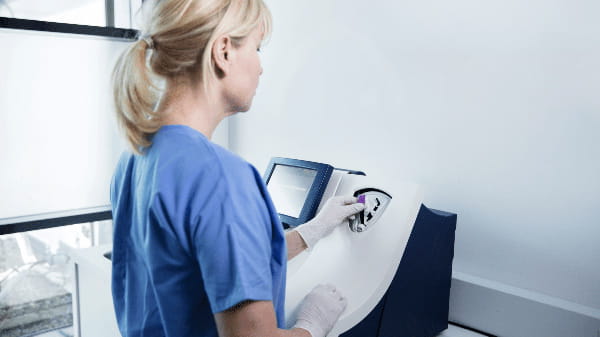
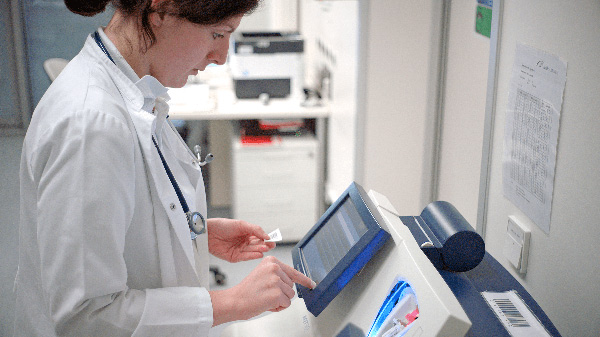
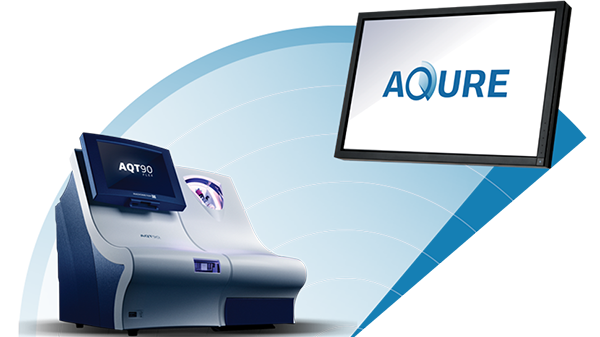
AQT90 FLEX immunoassay analyser
Point-of-care biomarker testing made simple
Check with your local representative for availability in specific markets
-
 Accelerate patient flow
-
Make critical decisions fast
-
Ensure reliable results
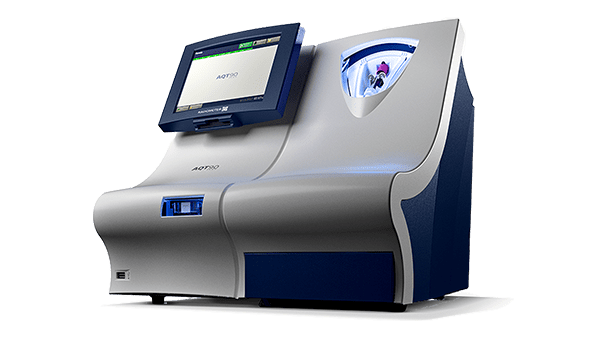
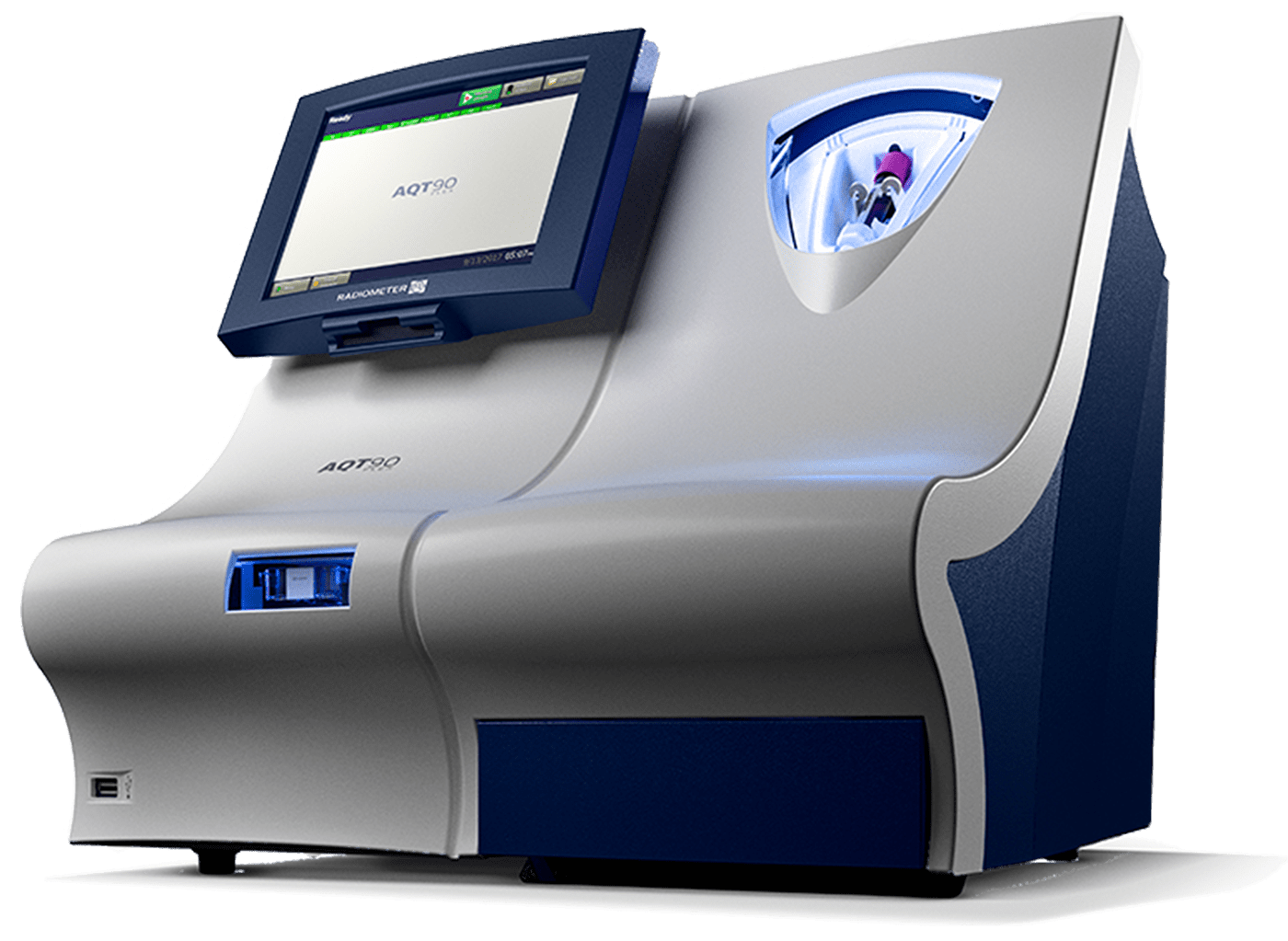
5. Test cartridges inlet
- Up to 240 tests when fully loaded
- 24 hrs. onboard stability for CAL cartridge
- Inventory alert when test number is low
3. Drop ’n’ Go
- Directly insert the closed sample tube
- Automatic pipetting
- Automatic mixing
- Test on both whole blood and plasma specimens*
- Multiple tube types: EDTA, Heparin & Citrate**
- Multiple tests can be run simultaneously.
*For the D-dimer assay, only whole blood samples can be used
**Citrate only applies for the D-dimer test
6. Connectivity
- HIS/LIS connectivity including automatic ‘patient ID lookup’
- Complete data capture through continous synchronization and data sent through HIS/LIS to the medical records
- Monitor analyzers, manage operators and quality controls across multiple sites
7. Barcode Reader
- No manual data entry needed
- Automatic reading of test cartridges
1. Customizable user interface
- Adjustable touch screen
- Onboard tutorials
- Customizable test selection
- Traffic light indicating current status
2. Quality Control (QC) Systems
Build in QC system automatical performs:
- Environmental checks
- Process checks
- Preanalytical checks
Ready-to-use liquid quality control (LQC) tubes
4. Solution Pack ‘Closed System’
- One solution pack for all tests
- Collection of waste
- Can be stored at room temperature
- Monitors the number of tests used
- Up to 200 tests before replacement is needed
- Disposal of the whole pack to avoid contact with blood






MAPSSS-000812 R3
Radiometer is using Microsoft AZURE Active Directory to authenticate users
Radiometer uses Azure AD to provide our customers and partners secure access to documents, resources, and other services on our customer portal.
If your organization is already using Azure AD you can use the same credentials to access Radiometer's customer portal.
Key benefits
- Allow the use of existing Active Directory credentials
- Single-sign on experience
- Use same credentials to access future services
Request access
You will receive an invitation to access our services via e-mail when your request has been approved.
When you accept the invitation, and your organization is already using AZURE AD, you can use the same credentials to access Radiometer's customer portal. Otherwise, a one-time password will be sent via e-mail to sign in.